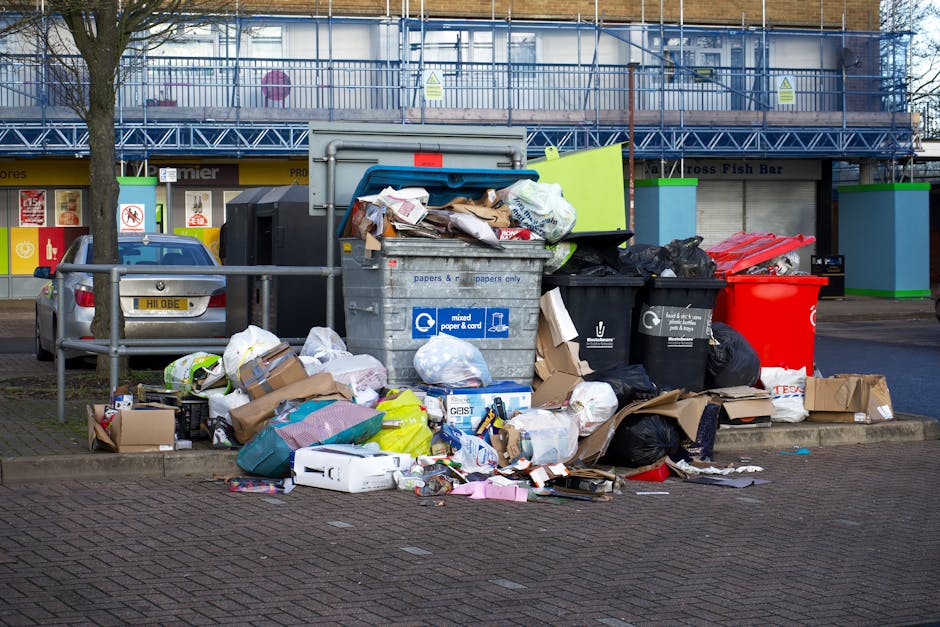
Royal Arsenal waste clearance guide for Woolwich landlords
If you let property in or around Royal Arsenal, waste clearance can quickly turn from a small admin job into a real headache. End-of-tenancy clutter, abandoned furniture, builder's debris, garden waste, and the odd mystery bag left in a cupboard all have a way of showing up at the worst possible moment. This Royal Arsenal waste clearance guide for Woolwich landlords is here to help you handle it cleanly, safely, and without the usual last-minute scramble.
Whether you manage one flat or several, the basics are the same: know what needs removing, separate anything special, work out the safest route, and keep the process tidy enough that the next inspection does not become a detective story. Truth be told, a good clearance routine saves time, protects the property, and makes tenant handovers far less stressful.
In this guide, you will find a practical step-by-step approach, a clear checklist, common mistakes to avoid, and sensible advice for choosing the right kind of clearance support for your Woolwich property.
Why Royal Arsenal waste clearance guide for Woolwich landlords Matters
Royal Arsenal is a busy, densely lived-in part of Woolwich, and that changes the way waste clearance works. Access can be tight, parking can be awkward, and timing matters when you are dealing with shared entrances, lifts, managed blocks, or a tenant moving out on a Saturday morning with boxes everywhere. A casual approach often leads to delays, complaints, or a property sitting empty longer than it should.
For landlords, waste is not just an appearance issue. It affects rent readiness, safety, insurance considerations, and how quickly you can reset the property for the next tenant. A half-cleared flat can hide broken glass, nails, food waste, damp boxes, or damaged furniture. Nobody wants that discovered by a letting agent five minutes before photos, let alone by a new occupant on day one.
There is also the practical side. If waste is dumped in communal areas, left on pavements, or mixed with items that need special handling, the clean-up can get more expensive and more disruptive. In our experience, the landlords who stay ahead of clearance are usually the ones who avoid those messy, expensive little surprises. Small thing, big difference.
If your property includes commercial spaces as well as residential units, it may also help to review business waste removal in Woolwich alongside your landlord process, especially where offices, workspaces, or mixed-use units are involved.
How Royal Arsenal waste clearance guide for Woolwich landlords Works
A good clearance process is simpler than it sounds. First, identify what needs to go. Then decide what can be reused, recycled, donated, or disposed of responsibly. After that, schedule the removal at a time that fits the building, the tenancy changeover, and any access rules. Finally, check the space properly once the items are gone.
For Royal Arsenal properties, the main challenge is usually coordination. You may need to work around concierge arrangements, loading restrictions, lift bookings, or quiet hours. If your property is a flat, the route from the front door to the vehicle matters almost as much as the removal itself. If it is a house, there may be loft contents, garden waste, or garage clearance to think about too.
Different types of waste need different handling. General mixed rubbish can often be dealt with as part of a standard waste removal visit. Bulky items, such as sofas or wardrobes, are a separate question. Appliances, mattresses, and fridges often need more specific handling. Hazardous materials need extra care and should never be treated like ordinary junk just to save time.
It sounds obvious, but landlords sometimes forget the hidden stuff. A cupboard full of old paperwork, a broken lamp in the hallway, paint tins in the shed, and a mattress left behind in a service cupboard can all slow a handover. If you want a fuller sense of what typical clearance jobs involve, the pages for flat clearance, house clearance, and home clearance can be useful starting points.
Key Benefits and Practical Advantages
Waste clearance done well does more than make a property look neat. It helps you keep the whole letting process moving. That is the real win.
- Faster turnaround: A clean, empty property is easier to photograph, market, inspect, and re-let.
- Better presentation: First impressions matter, and a cleared property simply feels more cared for.
- Improved safety: Removing loose waste reduces trip hazards, sharp edges, blocked exits, and pest attraction.
- Less tenant friction: A straightforward process cuts down on awkward messages and misunderstandings.
- More predictable costs: Planned clearance is usually easier to budget for than last-minute panic clean-ups.
- Better sustainability outcomes: Sorting reusable and recyclable items can reduce landfill-heavy disposal.
There is also a calmer, less visible benefit: better control. When you know what is in the property, what must be removed, and what should be set aside for specialist disposal, you make better decisions. Simple. Not glamorous, but very effective.
Landlords who regularly deal with turnover can also benefit from learning the difference between clearance, disposal, and haul-away services. For instance, furniture clearance is useful where bulky items dominate, while furniture disposal may be better if the pieces are beyond reuse. If appliances are part of the job, see fridge and appliance removal for a more suitable route.
Who This Is For and When It Makes Sense
This guide is aimed at landlords, but the reality is broader. If you manage a buy-to-let, a short-let, a block of flats, or a mixed-use property near Royal Arsenal, you will probably need a waste clearance plan at some point. It is especially relevant after tenant departures, refurbishments, surprise fly-tipping, or a long void period where clutter has piled up in storage areas.
It makes particular sense when:
- a tenant has left items behind after moving out;
- a property needs to be cleared before decorating or repairs;
- builder's waste is mixed with household rubbish;
- a flat contains bulky furniture that cannot be left for ordinary bin collection;
- shared areas have accumulated old belongings, broken items, or packaging;
- you want one coordinated clearance rather than several separate jobs.
Some landlords also use clearance support when they are taking back a property from a company let or office-style arrangement. If that sounds familiar, the page on office clearance may be more relevant than you first thought. Not everything in Woolwich fits into neat little boxes, does it?
And if the job includes outbuildings or awkward storage spaces, it can help to think beyond the obvious. A cluttered loft, garage, or garden corner can swallow far more waste than expected. Related pages such as loft clearance, garage clearance, and garden clearance may be useful depending on the property layout.
Step-by-Step Guidance
If you want a reliable process, keep it structured. A bit of order up front saves a lot of chasing later.
- Walk the property room by room. Note bulky furniture, bags of mixed waste, appliances, and anything that looks hazardous or confidential.
- Separate what can stay. Sometimes a tenant leaves useful items behind, or the next occupant can use furniture you planned to remove. Check carefully before loading anything out.
- Flag specialist items early. Fridges, electricals, mattresses, paint tins, cleaning chemicals, and confidential paperwork need particular attention.
- Decide on the clearance method. A single bulky load, a fuller rubbish removal, or a mixed-property clearance all need different planning.
- Check building access. Lift bookings, parking restrictions, and entry codes are the sort of detail that can make or break the day.
- Protect surfaces and shared areas. Hallways, communal stairs, and lobbies should be kept tidy. Nobody appreciates a trail of dust and scuffed walls.
- Confirm the final sweep. Once items are gone, check cupboards, behind doors, under beds, and inside balconies or utility spaces.
- Document the result. Photos and notes help with landlord records, deposit discussions, and contractor follow-up.
That last step is underrated. A few clear photos can save you from an irritating conversation later. You know the sort. "I thought that was already there." "No, it wasn't." Very standard landlord drama, unfortunately.
If the job is more about general waste than one specific category, you may want to look at waste removal as the broader service route. For building or refurbishment leftovers, builders waste clearance is the more natural fit.
Expert Tips for Better Results
Here is where a bit of practical experience pays off. Most landlord clearance problems are preventable.
Tip 1: clear before you deep clean. It is much easier to clean after the bulky items are gone. Otherwise you end up moving dust around twice. Not ideal, and a bit maddening.
Tip 2: group items by risk and priority. Put confidential paperwork, sharps, chemicals, and electrical items in their own categories. That keeps the disposal route clear in your head and reduces mistakes.
Tip 3: keep one "do not remove" zone. If there are tenant belongings under review, mark them clearly. A single labelled corner can stop a lot of confusion.
Tip 4: think about the next viewing. What will a prospective tenant notice first? Smell, light, floor space, and cleanliness all matter. A property should feel empty, fresh, and ready to live in.
Tip 5: line up the clearance with maintenance. If you already know the property needs decorating, carpet work, or appliance checks, schedule waste removal so the trades can work immediately after.
When the job includes awkward or heavy items, specialist pages such as mattress and sofa disposal can help you decide what needs separate treatment. Sofas especially have a habit of being more cumbersome than they look. One minute they are just a sofa, the next they are blocking a hallway like a stubborn small boat.
Common Mistakes to Avoid
Landlords do not usually get into trouble through one huge error. It is more often a series of small oversights.
- Leaving clearance too late: If you wait until the final day, you lose flexibility and pay more in stress than money.
- Mixing hazardous and general waste: Paint, chemicals, sharp items, and broken electronics should not be thrown into a random pile.
- Forgetting shared spaces: Communal hallways, bin stores, and garden areas often need clearing too.
- Assuming all bulky items are the same: A mattress, a fridge, and a wardrobe do not always follow the same disposal path.
- Not checking for tenant property: It is easy to accidentally remove something that should be kept aside for collection or review.
- Ignoring access constraints: A clearance team cannot do much if the lift is booked out or the vehicle has nowhere legal to stop.
A quieter mistake is failing to think about sustainability. Good clearance is not just about getting rid of stuff. It is about sorting what can be reused or recycled. That makes the process cleaner in every sense. For more on that side of things, see recycling and sustainability.
Tools, Resources and Recommendations
You do not need a huge toolkit, but a few sensible items make the job smoother. Think practical, not fancy.
- Property checklist: room-by-room notes for what needs removing and what stays.
- Labels or tape: useful for marking items to keep, remove, or review later.
- Protective gloves: sensible for inspections, especially if you are checking cupboards or lofts.
- Phone camera: before-and-after photos are useful and quick to take.
- Building access notes: codes, key handover details, parking arrangements, and lift bookings.
- Waste category notes: general, bulky, electrical, confidential, or hazardous.
For landlord paperwork and property admin, it also helps to know where service policies live. The site pages on health and safety policy, insurance and safety, and payment and security can support your due diligence checks if you are reviewing providers.
If you want to compare costs before booking, the pricing and quotes page is a sensible next stop. It is often the quickest way to decide whether the job needs a straightforward quote or a more detailed discussion.
Law, Compliance, Standards, or Best Practice
Landlords should be cautious around waste handling. While every property situation is different, there are a few best-practice principles that matter consistently in the UK. Waste should be stored safely, moved responsibly, and passed to a legitimate carrier. You should also keep an eye on duty of care, especially if you are arranging removal for a tenanted or managed property.
In plain English, that means you should know what is being removed, avoid illegal dumping, and use proper routes for items that need special treatment. That applies to electrical equipment, fridges, mattresses, confidential documents, and anything potentially hazardous. If it is dangerous, sharp, contaminated, or regulated in some way, treat it as such from the start.
Good practice also includes:
- keeping communal areas clear and safe during removal;
- minimising disruption to neighbours and other residents;
- checking items before disposal so reusable goods are not wasted by mistake;
- recording what was removed if the item list matters for tenancy or maintenance follow-up;
- making sure access and lifting plans do not create a safety issue for workers or residents.
For specialist waste, the relevant service page can be a helpful prompt. For example, if a property contains old chemical products or awkward residues, hazardous waste disposal is the better place to start than general waste removal. And if confidential paperwork has built up in a landlord office, confidential shredding is the safer route. No one wants tenant data floating around in a recycling bag. Let's not go there.
Options, Methods, or Comparison Table
Different clearance methods suit different landlord situations. Here is a simple comparison to make the decision easier.
| Method | Best for | Strengths | Watch-outs |
|---|---|---|---|
| General waste removal | Mixed rubbish, lighter turnover waste, quick clear-outs | Fast and flexible | May not suit bulky or specialist items |
| Bulky item clearance | Sofas, wardrobes, mattresses, large furniture | Good for awkward items | Needs the right handling and access |
| Property clearance | Whole flats, houses, void units, inherited contents | More comprehensive | Can require a fuller walkthrough and more planning |
| Specialist disposal | Fridges, appliances, hazardous materials, confidential waste | Safer and more compliant | May need separate scheduling |
| Builders waste clearance | Refurbishment debris, broken materials, renovation leftovers | Useful after works | Not ideal for general domestic clutter |
For many Royal Arsenal landlords, the answer is not one method but a combination. A flat might need furniture clearance, a little builders waste clearance, and a separate appliance removal. That is normal. A good plan accepts reality instead of pretending every property is tidy and symmetrical. They are not, are they?
Case Study or Real-World Example
Here is a realistic scenario. A landlord with a two-bedroom flat near Royal Arsenal receives notice that the tenant is leaving with little time to spare. The flat looks fine at first glance, but after the move-out there is a sofa that cannot be reused, a broken bedside table, two bags of mixed rubbish, an old fridge in the kitchen, and a few boxes of paperwork in the hallway cupboard.
The landlord does a quick room-by-room check and separates the obvious keep items from the items to remove. The fridge is flagged as a specialist item. The paperwork is set aside for confidential handling. The sofa and furniture are grouped for bulky clearance. The rest goes into a general waste pile. Access is checked with the building manager, and the clearance is scheduled before the cleaner arrives.
Because the work is organised properly, the property is emptied without disruption, photographed the same afternoon, and handed over for cleaning and minor touch-ups. The next viewer sees a calm, neutral, ready-to-let flat rather than a half-finished mess. Nothing dramatic happened. That is exactly the point.
In a slightly different case, a landlord with a small house and garden might also need garden clearance or even garage clearance if storage has become a catch-all over time. Those extra spaces often turn up more waste than expected, especially after a long tenancy.
Practical Checklist
Use this as a quick pre-clearance and post-clearance check. It keeps things moving, and it stops the usual "we forgot that bit" moment.
- Walk every room, cupboard, hallway, and storage area.
- Mark what stays and what goes.
- Separate furniture, appliances, mixed waste, and specialist items.
- Check for confidential paperwork and personal belongings.
- Confirm access, parking, and building rules.
- Protect communal routes and surfaces.
- Schedule the clearance before cleaning or decorating.
- Take before-and-after photos.
- Check that all high-risk or specialist items have been handled properly.
- Review the property one last time before keys are handed over.
If you manage several units, it can help to keep a reusable checklist template for each tenancy change. The structure stays the same; only the items change. Nice and boring. Which, in landlord admin, is usually a compliment.
Conclusion
Royal Arsenal waste clearance for Woolwich landlords is really about control, timing, and making the next step easier. When you plan it properly, you protect the property, reduce stress, and avoid the sort of delays that make a simple move-out feel unnecessarily complicated. The best results usually come from a clear room-by-room approach, sensible sorting, and a little attention to access, safety, and specialist items.
Keep it practical. Keep it documented. And do not leave it until the last minute if you can help it. A calm, well-cleared property is easier to let, easier to clean, and easier to hand over with confidence. That part never gets old.
Get a free quote today and see how much you can save.
When you are ready to compare options, it is worth revisiting the service pages that match your property type and waste mix, then choosing the route that feels cleanest and simplest for your tenancy schedule. A good clearance day should leave you with one less thing to worry about, which is honestly worth a lot.
Frequently Asked Questions
What is the best waste clearance approach for a Royal Arsenal rental property?
The best approach depends on what is left behind. If it is mostly mixed rubbish, general waste removal may be enough. If there are sofas, mattresses, appliances, or renovation debris, you will usually need a more specific clearance plan. For many landlords, the most efficient route is a mixed service that handles bulky items and general waste together.
How do I know if items need specialist disposal?
Anything that is electrical, hazardous, confidential, or hard to lift should be treated carefully. Fridges, old paint, chemicals, paperwork, and damaged mattresses are common examples. If you are unsure, separate the item and identify it before the day of clearance. That avoids rushed decisions later.
Can I leave tenant belongings in a communal area?
Usually, that is not a good idea. Communal hallways, bin stores, and shared landings need to stay clear for safety and access. If belongings have been left behind, the better option is to document them, separate them properly, and arrange a lawful removal or collection process.
Is furniture clearance different from furniture disposal?
Yes, in practice they can be different. Furniture clearance is often the wider job of removing multiple bulky items from a property, while furniture disposal focuses more on how those items are handled at the end of the process. If the furniture is reusable, repairable, or recyclable, that may affect the route chosen.
How quickly can a landlord clear a flat after a tenant leaves?
That depends on access, the amount of waste, and whether specialist items are involved. A straightforward flat with good access can often be cleared much faster than a property with mixed waste, storage areas, or building restrictions. Planning ahead always helps. Always.
What should I do with a fridge left in the property?
A fridge should be treated as a specialist item, not ordinary rubbish. It is bulky, awkward, and not something you want handled casually. The safer approach is to separate it from general waste and arrange a suitable appliance removal route.
Do I need to sort waste before the collection team arrives?
It helps a lot, though you do not need to make it perfect. A basic sort into furniture, general waste, appliances, and specialist items saves time and reduces the risk of mistakes. Even a few clearly marked piles can make the day much smoother.
What if there is hazardous waste in the property?
Do not mix it with ordinary waste. Hazardous materials need extra care and should be identified early. Keep them separate, avoid handling them without the right precautions, and use a disposal route that is appropriate for the material involved.
How can landlords reduce waste clearance costs?
Good planning is the biggest factor. Remove usable items early, group waste properly, avoid unnecessary delays, and choose the right service type for the job. If everything is left until the final hour, the whole process becomes harder to manage and usually more expensive.
Is there a difference between house clearance and flat clearance for landlords?
Yes. A flat usually involves more building access issues, lift use, and communal-area care, while a house may include lofts, gardens, sheds, or garages. The waste pattern is different, so the clearance plan should be different too.
Can I use a skip instead of a clearance service?
Sometimes, yes, but it depends on the waste type, access, and volume. A skip can work well for certain projects, though landlords often prefer a clearance service when bulky items, restricted access, or time pressure are involved. If you are comparing options, the page on what can go in a skip is a useful reference.
What should I ask before booking a clearance?
Ask what items are included, how access will be handled, whether special items need separate treatment, what happens with recycling, and how pricing is structured. It is also sensible to ask about safety, insurance, and payment details so there are no surprises on the day.
Where can I find more information about booking or company details?
If you want to learn more about the business, the about us page is a useful place to start, while the book online page is the natural next step when you are ready to arrange a clearance. If you are checking policies first, terms and conditions may also be worth reviewing.